
Hi, I’m Rini.
I work between worlds.
Marketing strategist with 14 years across Asia, Europe, and a few categories from different worlds.
Consumer marketing runs on feeling. Regulated industries run on trust. I've spent my career learning both, across India and Europe.
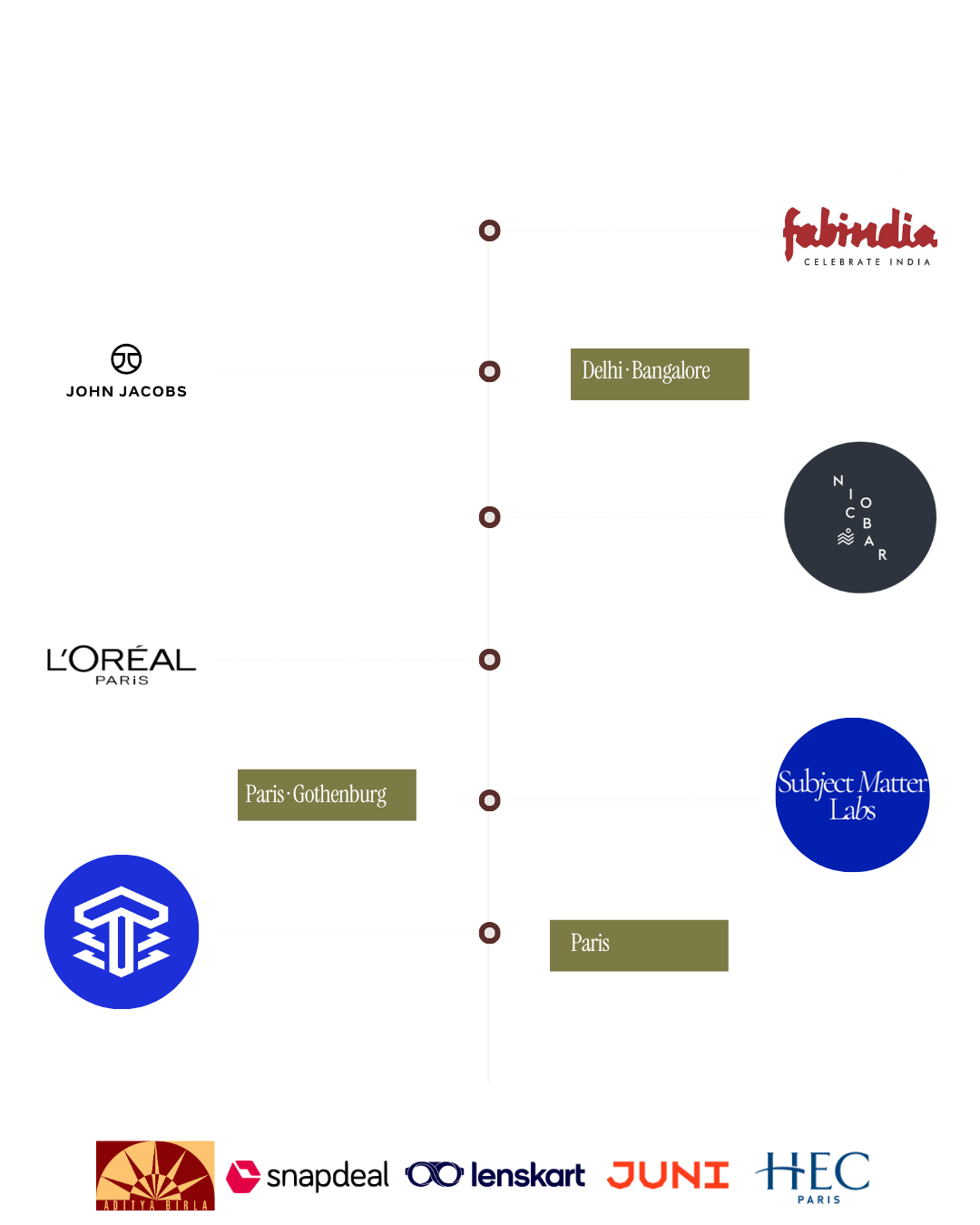
My marketing philosophy comes from the path I took to get here. I started in Delhi, working in ecommerce and running a small jewelry brand called Tribana on the side, where I learned early that storytelling and a strong narrative are what make a brand memorable.
I built on that at brands like Fabindia, Lenskart and Nicobar, that were shaping culture at the time, and are stalwarts of Indian retail today, and category creators in their own right.
After my MBA from HEC Paris, I worked in fintech at Juni, a Swedish spend managmeent software, and now lead marketing at Temelion, an AI company for construction engineers.
Each of these jobs taught me the same thing: good brands don't try to fit in, they hold onto a clear point of view. That's the belief I bring to my work at Temelion, and to the handful of founders I work with on the side.
I build your brand’s competitive moat, with taste.
My Approach
Marketing is part craft, part culture, part experimentation and the best work happens when none of those three get sacrificed for the others. Most teams over-index on one. The job is usually to bring the missing ones back.
01 Position before you promote.
Most marketing problems are positioning problems wearing other costumes. Before I touch channels, copy, or campaigns, I want to know: who are we, for whom, against whom, and why us? When the answer is sharp, the rest of the work gets easier and cheaper. When it isn't, no amount of media spend fixes it.
02 The full-stack marketer beats the specialist.
The marketers who do the best work are usually the ones who can hold both the brand argument and the spreadsheet in their head at the same time. I've spent ten years moving between the analytical and the editorial sides of this craft on purpose, because the most interesting problems live where they meet.
03 Taste is a Strategy
In an industry rapidly automating its outputs, the companies that win will be the ones whose work is recognisably theirs. Brand voice, visual judgment, and the editorial instinct to know what to leave out are no longer "soft" skills, they're the moat. AI didn't make taste less valuable, but made it scarce.
04 The brief is rarely the brief.
"We need more leads" almost always turns out to be a positioning problem. "We need a brand refresh" almost always turns out to be a clarity-of-thinking problem. The most useful thing I do in the first week of any engagement is figure out what the actual question is. The work after that is usually easier to follow.
Career Map
I started in fashion retail and ecommerce in Delhi and ended up leading marketing for a vertical AI platform in Paris, with a few stops in between.
Explore my work

Subject Matter
A weekly newsletter and podcast on storytelling, technology, and the brands reshaping global commerce particularly from the Global South.
I founded it in 2024 to capture cultural shifts from the global south: India, SEA, Lagos, the Gulf, São Paulo. It's part essay, part reporting, part conversation, written for marketers, founders, and operators who want to think a layer deeper than their feed allows

Custodians of Crafts
A podcast at the intersection of heritage, business, and innovation across the craft and fashion ecosystem.
I started it to spotlight founders, makers, and thinkers, particularly from the Global South, who are keeping cultural crafts commercially relevant in an age of mass production and AI.
These are the conversations mainstream fashion media isn't having: with the people building textile studios in India, fashion-tech in Pakistan, craft economies in Tunisia, climate-led design in Nigeria. Less interview, more long-form thinking, with founders most podcasts haven't found yet.

The Labs
An IRL community I'm building in Paris for marketers, creatives, and founders who believe marketing is part craft, part culture, part experimentation. Expert circles, work-in-public sessions, signals from the field, and a peer group that takes the work seriously. Free signals for everyone, paid expert circles for members.
The Labs exists for the people who want to think better, not just execute faster and who suspect the most useful conversations about marketing happen in rooms, not on LinkedIn.